

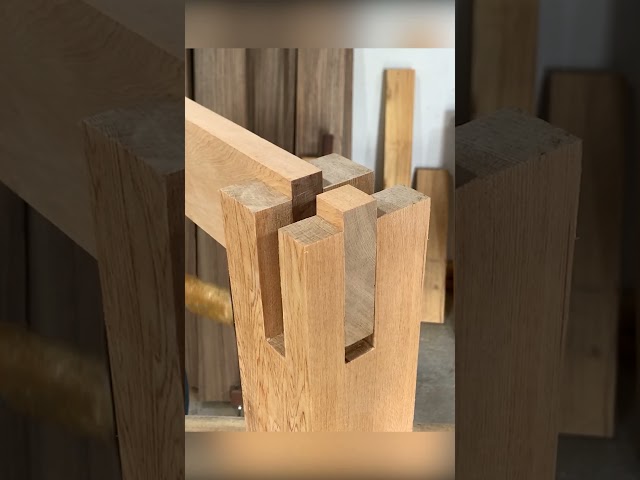
Creating unique table legs with interlocking mortise joints can add both structural integrity and visual interest to your furniture. Here are some design ideas and techniques for achieving this:
1. Geometric Interlocking Mortise Legs
X-Shaped or Crossed Legs: Two legs interlock at the center with a half-lap or bridle joint, forming an "X." This creates a stable base and a striking silhouette.
Hexagonal or Triangular Frames: Multiple legs (3 or more) interlock at angles using compound mitered mortises, forming a geometric base.
2. Japanese-Inspired Joinery
Shachi Sen (Dovetail-like Interlock): A complex interlocking joint where legs slot into a central hub with angled mortises, common in traditional Japanese furniture.
Kanawa Tsugi (Tusk Tenon): A decorative yet strong joint where a tenon passes through a mortise and is secured with a wedge.
3. Twisted or Spiral Interlocking Legs
Two or more legs can be carved or laminated in a helical shape, with interlocking mortises at key points to maintain stability while creating a dynamic look.
4. Modular Interlocking System
Design legs that slot into a central "hub" with multiple mortises, allowing for easy assembly/disassembly (great for flat-pack furniture).
5. Asymmetrical Interlocking Design
Uneven leg lengths or angles that intersect at unconventional points, secured with hidden mortise-and-tenon joints.
Construction Tips:
Precision is Key: Use a router, CNC, or precise hand tools (chisels & saws) for clean mortises.
Dry Fit First: Test-fit all joints before gluing to ensure alignment.
Reinforcement: For extra strength, add hidden dowels or wedges.
Material Choice: Hardwoods (oak, walnut, maple) work best for intricate joinery.
Finishing Touches:
Highlight the joints with contrasting wood or epoxy fills.
Chamfer or round edges for a refined look.
.jpg)
.jpg)


.jpg)